Showing posts with label gemstone. Show all posts

Sunday, May 23, 2010

Pearl

source : wikipedia

A pearl is a hard object produced within the soft tissue (specifically the mantle) of a living shelled mollusk. Just like the shell of a mollusk, a pearl is made up of calcium carbonate in minute crystalline form, which has been deposited in concentric layers. The ideal pearl is perfectly round and smooth, but many other shapes of pearls (baroque pearls) occur. The finest quality natural pearls have been highly valued as gemstones and objects of beauty for many centuries, and because of this, the word pearl has become a metaphor for something very rare, fine, admirable, and valuable.

Valuable pearls occur in the wild, but they are very rare. Cultured or farmed pearls from pearl oysters make up the majority of those that are currently sold. Pearls from the sea are valued more highly than freshwater pearls. Imitation or fake pearls are also widely sold in inexpensive jewelry, but the quality of their iridescence is usually very poor - and generally speaking, artificial pearls are easily distinguished from genuine pearls. Pearls have been harvested and cultivated primarily for use in jewelry, but in the past they were also stitched onto lavish clothing. Pearls have also been crushed and used in cosmetics, medicines, or in paint formulations.

Pearls that are considered to be of gemstone quality are almost always nacreous and iridescent, like the interior of the shell that produces them. However, almost all species of shelled mollusks are capable of producing pearls (formerly referred to as "calcareous concretions" by some sources) of lesser shine or less spherical shape. Although these may also be legitimately referred to as "pearls" by gemological labs and also under U.S. Federal Trade Commission rules, and are formed in the same way, most of them have no value, except as curios.

Definition


Almost any shelled mollusk can, by natural processes, produce some kind of "pearl" when an irritating microscopic object becomes trapped within the mollusk's mantle folds, but the great majority of these "pearls" are not valued as gemstones. Nacreous pearls, the best-known and most commercially-significant pearls, are primarily produced by two groups of molluscan bivalves or clams. A nacreous pearl is made from layers of nacre, by the same living process as is used in the secretion of the mother of pearl which lines the shell.

A "natural pearl" is one that forms without any human intervention at all, in the wild, and is very rare. Many hundreds of pearl oysters or pearl mussels have to be gathered and opened, and thus killed, in order to find even one wild pearl, and for many centuries that was the only way pearls were obtained. This was the main reason why pearls fetched such extraordinary prices in the past. A cultured pearl, on the other hand, is one that has been formed with human intervention on a pearl farm.

One family of nacreous pearl bivalves, the pearl oysters, lives in the sea while the other, very different group of bivalves live in freshwater; these are the river mussels such as the freshwater pearl mussel. Saltwater pearls can grow in several species of marine pearl oysters in the family Pteriidae. Freshwater pearls grow within certain (but by no means all) species of freshwater mussels in the order Unionida, the families Unionidae and Margaritiferidae.


A black pearl and a shell of the black-lipped pearl oyster


A pearl being extracted from an akoya pearl oyster.


Value of a natural pearl

Quality natural pearls are very rare jewels. The actual value of a natural pearl is determined in the same way as it would be for other "precious" gems. The valuation factors include size, shape, quality of surface, orient and luster.

Single natural pearls are often sold as a collector's item, or set as centerpieces in unique jewelry. Very few matched strands of natural pearls exist, and those that do often sell for hundreds of thousands of dollars. (In 1917, jeweler Pierre Cartier purchased the Fifth Avenue mansion that is now the New York Cartier store for US$100 cash and a double strand of matched natural pearls valued at the time at US$1 million.)

Keshi pearls, although they often occur by chance, are not considered natural pearls. They are a byproduct of the culturing process, and hence do not happen without human intervention. These pearls are quite small: typically a few millimeters in size. Keshi pearls are produced by many different types of marine mollusks and freshwater mussels in China. Today many "keshi" pearls are actually intentional, with post-harvest shells returned to the water to regenerate a pearl in the existing pearl sac.

source : http://en.wikipedia.org/wiki/Pearl

Opal : as a mineral

source : wikipedia.org

Opal is a mineraloid gel which is deposited at a relatively low temperature and may occur in the fissures of almost any kind of rock, being most commonly found with limonite, sandstone, rhyolite, marl and basalt. The word opal comes from the Latin opalus, by Greek ὀπάλλιος opallios.

The water content is usually between three and ten percent, but can be as high as twenty percent. Opal ranges from clear through white, gray, red, orange, yellow, green, blue, magenta, rose, pink, slate, olive, brown, and black. Of these hues, the reds against black are the most rare, whereas white and greens are the most common. These color variations are a function of growth size into the red and infrared wavelengths. Opal is Australia's national gemstone.

Precious opal

Precious opal shows a variable interplay of internal colors and even though it is a mineraloid, it does have an internal structure. At micro scales precious opal is composed of silica spheres some 150 to 300 nm in diameter in a hexagonal or cubic close-packed lattice. These ordered silica spheres produce the internal colors by causing the interference and diffraction of light passing through the microstructure of the opal.It is the regularity of the sizes and the packing of these spheres that determines the quality of precious opal. Where the distance between the regularly packed planes of spheres is approximately half the wavelength of a component of visible light, the light of that wavelength may be subject to diffraction from the grating created by the stacked planes. The spacing between the planes and the orientation of planes with respect to the incident light determines the colors observed. The process can be described by Bragg's Law of diffraction.

Visible light of diffracted wavelengths cannot pass through large thicknesses of the opal. This is the basis of the optical band gap in a photonic crystal, of which opal is the best known natural example. In addition, microfractures may be filled with secondary silica and form thin lamellae inside the opal during solidification. The term opalescence is commonly and erroneously used to describe this unique and beautiful phenomenon, which is correctly termed play of color. Contrarily, opalescence is correctly applied to the milky, turbid appearance of common or potch opal. Potch does not show a play of color.

The veins of opal displaying the play of color are often quite thin, and this has given rise to unusual methods of preparing the stone as a gem. An opal doublet is a thin layer of opal, backed by a swart mineral such as ironstone, basalt, or obsidian. The darker backing emphasizes the play of color, and results in a more attractive display than a lighter potch.

Combined with modern techniques of polishing, doublet opal produces similar effect of black or boulder opals at a mere fraction of the price. Doublet opal also has the added benefit of having genuine opal as the top visible and touchable layer, unlike triplet opals.

The triplet-cut opal backs the colored material with a dark backing, and then has a domed cap of clear quartz or plastic on top, which takes a high polish and acts as a protective layer for the relatively fragile opal. The top layer also acts as a magnifier, to emphasize the play of color of the opal beneath, which is often of lower quality. Triplet opals therefore have a more artificial appearance, and are not classed as precious opal.

Precious opal consists of spheres of silica of fairly regular size, packed into close-packed planes which are stacked together with characteristic dimensions of several hundred nm.

Common opal

Besides the gemstone varieties that show a play of color, there are other kinds of common opal such as the milk opal, milky bluish to greenish (which can sometimes be of gemstone quality), resin opal which is honey-yellow with a resinous luster, wood opal which is caused by the replacement of the organic material in wood with opal, menilite which is brown or grey, hyalite is a colorless glass-clear opal sometimes called Muller's Glass, geyserite, also called siliceous sinter, deposited around hot springs or geysers and diatomite or diatomaceous earth, the accumulations of diatom shells or tests.

Other varieties of opal

Polished opal from Yowah, Queensland, AustraliaFire opals are transparent to translucent opals with warm body colors yellow, orange, orange-yellow or red and they do not usually show any play-of-color, although occasionally a stone will exhibit bright green flashes. The most famous source of fire opals is the state of Querétaro in Mexico and these opals are commonly called Mexican fire opals.

Peruvian opal (also called blue opal) is a semi-opaque to opaque blue-green stone found in Peru which is often cut to include the matrix in the more opaque stones. It does not display pleochroism.

Sources of opal

Australia produces around 97% of the world's opal. 90% is called ‘light opal’ or white and crystal opal. White makes up 60% of the opal productions but cannot be found in all of the opal fields. Crystal opal or pure hydrated silica makes up 30% of the opal produced, 8% is black and only 2% is boulder opal.

The town of Coober Pedy in South Australia is a major source of opal. Andamooka in South Australia is also a major producer of matrix opal, crystal opal, and black opal. Another Australian town, Lightning Ridge in New South Wales, is the main source of black opal, opal containing a predominantly dark background (dark-gray to blue-black displaying the play of color). Boulder opal consists of concretions and fracture fillings in a dark siliceous ironstone matrix. It is found sporadically in western Queensland, from Kynuna in the north, to Yowah and Koroit in the south.
The Virgin Valley opal fields of Humboldt County in northern Nevada produce a wide variety of precious black, crystal, white, fire, and lemon opal. The black fire opal is the official gemstone of Nevada. Most of the precious opal is partial wood replacement. Miocene age opalised teeth, bones, fish, and a snake head have been found. Some of the opal has high water content and may desiccate and crack when dried. The largest black opal in the Smithsonian Institution comes from the Royal Peacock opal mine in the Virgin Valley.

Another source of white base opal or creamy opal in the United States is Spencer, Idaho. Spencer has an open pit mine that you can visit for a fee, about 4 times a year. One business in Spencer also brings material down from the mine site to their store, so that would be opal miners can dig for their own opal, again for a nominal fee. A high percentage of the opal found there occurs in thin layers. As a result, most of the production goes into the making of doublets and triplets.

Other significant deposits of precious opal around the world can be found in the Czech Republic, Slovakia, Hungary, Turkey, Indonesia, Brazil (Pedro II a city in the state of Piauí), Honduras, Guatemala, Nicaragua and Ethiopia.

In late 2008, NASA announced that it had discovered opal deposits on Mars.

Historical superstitions

In the Middle Ages, opal was considered a stone that could provide great luck because it was believed to possess all the virtues of each gemstone whose color was represented in the color spectrum of the opal. It was also said to confer the power of invisibility if wrapped in a fresh bay leaf and held in the hand.Following the publication of Sir Walter Scott's Anne of Geierstein in 1829, however, opal acquired a less auspicious reputation. In Scott's novel, the Baroness of Arnheim wears an opal talisman with supernatural powers. When a drop of holy water falls on the talisman, the opal turns into a colorless stone and the Baroness dies soon thereafter. Due to the popularity of Scott's novel, people began to associate opals with bad luck and death.Even as recently as the beginning of the 20th century, it was believed that when a Russian saw an opal among other goods offered for sale, he or she should not buy anything more since the opal was believed to embody the evil eye.

Opal is considered the birthstone for people born in October or under the sign of Libra and the star stone for people born under Scorpio.

Sunday, May 9, 2010

Tanzanite : as a mineral

Tanzanite rough stone and cut stoneFrom Wikipedia, the free encyclopedia

Tanzanite is the blue/purple variety of the mineral zoisite which was discovered in the Meralani (Merelani) Hills of Northern Tanzania in 1967, near the city of Arusha. It is used as a gemstone. Tanzanite is noted for its remarkably strong trichroism, appearing alternately sapphire blue, violet, and burgundy depending on crystal orientation.

Tanzanite in its rough state is usually a reddish brown color. It requires artificial heat treatment to 600 °C in a gemological oven to bring out the blue violet of the stone.Tanzanite is a rare gem. It is found mostly in the foothills of Mount Kilimanjaro. The mineral is named after Tanzania, the country where it was discovered.

World's largest tanzanite

One of the most famous large tanzanite "Queen of Kilimanjaro",on 18 karat white gold

The world's largest faceted tanzanite is 737.81 carats.One of the most famous large tanzanites (242 carats) is the "Queen of Kilimanjaro". It is set in a tiara and accented with 803 brilliant cut tsavorite garnets and 913 brilliant cut diamonds. Because tanzanite is relatively soft, it is not usually set in necklaces and earrings, so the tiara is truly a rarity.The tiara is currently on display in the Gallery of Gold and Gems at the Royal Ontario Museum in Toronto, Ontario, Canada. The exhibition is from the private collection of Michael Scott, the first CEO of Apple Computers.

Factors affecting value: grading

There is no universally accepted method of grading colored gemstones. TanzaniteOne, a A rough sample of tanzanitemajor commercial player in the tanzanite market, through its no-profit subsidiary, The Tanzanite Foundation, has introduced its own color grading system. The new system's color-grading scales divide tanzanite colors into a range of hues, between blue violet and violet blue.

The normal primary and secondary hues in tanzanite are blue and purple not violet. Purple is a modified spectral hue that lies halfway between red and blue. Tanzanite is a trichroic gemstone, meaning that light that enters the stone is divided into three sections each containing a portion of the visible spectrum. After heating, tanzanite becomes dichroic. The dichroic colors are red and blue. The hue range of tanzanite is blue-purple to purple-blue.

Clarity grading in colored gemstones is based on the eye-clean standard, that is, a gem is considered flawless if no inclusions are visible with the unaided eye (assuming 20x20 vision).The Gemological Institute of America classifies tanzanite as a Type I gemstone, meaning it is normally eye-flawless. Gems with eye-visible inclusions will be traded at deep discounts.
source : wikipedia

Sunday, May 2, 2010

Topaz Jewelry Photos

Topaz GemstonesBlue Topaz RingBlue Topaz EarringsBlue Topaz NecklaceCaribbean Topaz

Topaz : as a mineral

Topaz :as a mineralsource : Wikipedia, the free encyclopedia

Topaz is a silicate mineral of aluminium and fluorine with the chemical formula Al2SiO4(F,OH)2. Topaz crystallizes in the orthorhombic system and its crystals are mostly prismatic terminated by pyramidal and other faces.

Color and varieties

Pure topaz is colorless and transparent but is usually tinted by impurities; typical topaz is wine, yellow, pale gray or reddish-orange, blue brown. It can also be made white, pale green, blue, gold, pink (rare), reddish-yellow or opaque to transparent/translucent.

Orange topaz, also known as precious topaz, is the traditional November birthstone, the symbol of friendship, and the state gemstone for the US State of Utah

Imperial topaz is yellow, pink (rare, if natural) or pink-orange. Brazilian Imperial Topaz can often have a bright yellow to deep golden brown hue, sometimes even violet. Many brown or pale topazes are treated to make them bright yellow, gold, pink or violet colored. Some imperial topaz stones can fade on exposure to sunlight for an extended period of time.Blue topaz is the Texas state gemstone. Naturally occurring Blue Topaz is quite rare. Typically, colorless, gray or pale yellow and blue material is heat treated and irradiated to produce a more desired darker blue.

Mystic topaz is colorless topaz which has been artificially coated giving it the desired rainbow effect.


Localities and occurrence

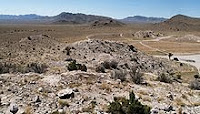
Topaz Mountain, Utah

<-Topaz Mountain, Utah
Topaz is commonly associated with silicic igneous rocks of the Topaz is commonly associated with silicicgranite and rhyolite type. It typically crystallizes in granitic pegmatites or in vapor cavities in rhyolite lava flows like those at Topaz Mountain in western Utah. It can be found with fluorite and cassiterite in various areas including Ural and Ilmen mountains of Russia, in Afghanistan, Sri Lanka, Czech Republic, Germany, Norway, Pakistan, Italy, Sweden, Japan, Brazil, Mexico, Flinders Island, Australia and the United States.

Some clear topaz crystals from Brazilian pegmatites can reach boulder size and weigh hundreds of pounds. Crystals of this size may be seen in museum collections. The Topaz of Aurungzebe, observed by Jean Baptiste Tavernier measured 157.75 carats.

Colorless and light-blue varieties of topaz are found in Precambrian granite in Mason County, Texas within the Llano Uplift. There is no commercial mining of topaz in that area.

Colorless topaz, Minas Gerais, Brazil


A cut blue topazA cut blue topaz


A red topazA red topaz


Imperial Topaz GemImperial Topaz Gem


Facet Cut Topaz Gemstones in various colors, including mysticFacet Cut Topaz Gemstones in various colors, including mystic.


Etymology and historical and mythical usage

The name "topaz" is derived (via Old French: Topace and Latin: Topazus) from the Greek Τοπάζιος (Τοpáziοs) or Τοπάζιον (Τοpáziοn), the ancient name of St. John's Island in the Red Sea which was difficult to find and from which a yellow stone (now believed to be chrysolite: yellowish olivine) was mined in ancient times; topaz itself (rather than topazios) wasn't really known about before the classical era. Nicols, the author of one of the first systematic treatises on minerals and gemstones, dedicated two chapters to the topic in 1652. In the Middle Ages, the name topaz was used to refer to any yellow gemstone, but in modern times it denotes only the silicate described above.

Many modern English translations of the Bible, including the King James Version mention Topaz in Exodus 28:17 in reference to a stone in the Hoshen: "And thou shalt set in it settings of stones, even four rows of stones: the first row shall be a sardius, a topaz, and a carbuncle (Garnet): this shall be the first row."

However, because these translations as topaz all derive from the Septuagint translation topazi[os], which as mentioned above referred to a yellow stone that was not topaz, but probably chrysolite, it should be borne in mind that topaz is not meant here.The masoretic text (the Hebrew on which most modern Protestant Bible translations of the Old Testament are based) has pitdah as the gem the stone is made from; some scholars think it is related to an Assyrian word meaning flashed.More likely, pitdah is derived from Sanskrit words (पीत pit = yellow, दह् dah = burn), meaning "yellow burn". Pliny says that Topazos is a legendary island in the Red Sea and the mineral "topaz" was first mined there. The word topaz might be related to the Arabic word توباز which meant "the subject of the search" or Sanskrit word तपस् "tapas" meaning "heat" or "fire."

source : wikipeadia

Friday, April 23, 2010

Black Diamonds

What are Black Diamonds, as seen in most jewelry?

Black diamonds are typically enhanced. Black diamonds are genuine diamonds treated with radiation to make their color appear black. Under normal lighting conditions the color enhanced black diamond looks black. However, it is actually very dark green. To observe the very dark green color, a fiber-optic light source can be placed near a thin edge of the diamond (such as the girdle or culet). This allows the light to illuminate some of the interior of the stone. The very dark green color that becomes visible is commonly seen in enhanced black diamonds. The very dark green color that is seen is never seen in natural diamonds. It is a result of radiation treatment.

Famous Black Diamonds

The Black Orloff

The Black Orloff black diamondThe Black Orloff (Orlov) cushion cut diamond (shown left) which still weighs in at a very respectable 67.50 carats. It is reported to have belonged to a nineteenth-century shrine near Pondicherry, India, and to have weighed 195 carats in the rough. Set in a diamond and platinum necklace, the Black Orloff has been widely exhibited. In 1969, the stone was sold for $300,000. It was resold in 1990 at Sothebys for $99,000. Also called the Eye of Brahma Diamond. The diamond is currently owned by Dennis Petimezas, a diamond dealer from Pennsylvania who bought the diamond for an unspecified sum in 2005.

"The Gruosi" Black Diamond

'The Gruosi' black diamond

Upon creating amazing black diamond jewelry for his luxury jewelry house de Grisogono, chairman and founder Fawaz Gruosi enjoys a special place in diamond history: he is credited with popularizing the fascination with black diamonds in 1996 - a fascination that continues today.

He also had a rare opportunity - a rare opportunity even for a grand jeweler like himself: he got to name a diamond. Naming a diamond is something reserved only for original buyers of a rough diamond. The de Grisogono founder chose the name "The Gruosi" for the incredible 115.34-carat black diamond. In fact, Fawaz Gruosi has actually been involved in naming two diamonds - the other being the 312.24-carat "The Spirit of Grisogono," also a black diamond with the famous Swiss jeweler Mr. de Grisogono. These two black diamonds are the two largest black diamonds in the world.

sources : generousgems.com,blackdiamonds.co.uk,vialuxe.com

Famous Emeralds

Gachala Emerald (origin: Colombia)
The Gachala Emerald is an uncut 5-cm emerald crystal weighing 858 carats (172 g). The stone was found in 1967 at Vega de San Juan mine in Colombia and is named after the mining district where it was discovered. Now in the United States, it was donated to the Smithsonian Institution by the New York jeweler, Harry Winston.

Gachala Emerald
Gachala Emerald
Chalk Emerald (origin: Colombia)
The Chalk Emerald is a 37.82 carats (7.56 g) Colombian emerald.

It originally weighed 38.40 carats (7.68 g), but was recut and set in a ring, where it is surrounded by sixty pear-shaped diamonds (totalling 15 carats (3.0 g), by Harry Winston Inc. The ring is housed in the National Gem and Mineral Collection at the Smithsonian Natural History Museum in the United States and was donated to the museum by Mr. and Mrs. O. Roy Chalk in 1972.
Chalk EmeraldChalk Emerald
Duke of Devonshire Emerald (origin: Colombia)

Duke of Devonshire EmeraldThe Duke of Devonshire Emerald gets its name from the 6th Duke of Devonshire, William Cavendish, who according to one version, received the enormous gemstone as a gift from the first emperor of Brazil, Don Pedro I, the son of King John VI of Portugal, but according to a second version purchased the gemstone from the emperor.

The Duke of Devonshire Emerald is a terminated hexagonal-shaped crystal discovered from the mines of Muzo, Santa Fe de Bogota, in Colombia, reputed to be the premier source of the world's finest emeralds. It is an exceptional deep-green emerald, with perfect transparency in certain areas, but heavily flawed in other areas. The emerald that measures 5 cm across the pinacoid also has a height of about 5 cm, and weighs 1,383.95 carats. The emerald had a reputation as the largest and finest uncut emerald in existence.

Duke of Devonshire EmeraldMackay Emerald
The stunning 167.97-carat Mackay Emerald was mined in Muzo, Columbia. The largest cut emerald in the National Gem Collection, it is set in an Art Deco diamond and platinum necklace designed by Cartier Inc. In 1931, Clarence H. Mackay presented the necklace as a wedding gift to his wife, Anna Case, a prima donna of the New York Metropolitan Opera from 1909 to 1920. The piece was donated to the Smithsonian Institute by Mrs. Anna Case Mackay in 1984. Source: The National Gem Collection by Jeffrey E. Post.
Mackay Emerald

Saturday, April 17, 2010

Jewelry Art Awards 2009 of Jewelry Artist Magazine

The 2009 Jewelry Arts Awards

Jewelry Artist magazine's annual competition yields 10 outstanding winners

Pins & Brooches


FIRST WAVE

Naomi Sarna
First Place, Pins/Brooches
(Also Best of Competition)
FIRST WAVE
32mm x 23mm. 18K gold, Chinese freshwater pearl, VS diamonds, Montana sapphires, Contra-luz opals, Imperial topaz. Handmade lost-wax gold setting surrounding pegged and epoxy-set pearl. All stones are pave set with bright-cut finishing. Photo: Azad. sarna.naomi@gmail.com, naomisarnadesigns.com


JUBILANT HEART

Naomi Sarna
Second Place, Pins/Brooches
JUBILANT HEART.
38.5mm x 43.3 mm. 87.5 carat rose quartz, 18K gold, VS diamonds, Montana sapphire, Impreial topaz, Contra-luz opal. Lost-wax carved and gold-cast setting. Photo: Azad. sarna.naomi@gmail.com, naomisarnadesigns.com

Bracelets

MOON PHASES CUFF

Genevieve Yang
First Place, Bracelets
MOON PHASES CUFF.
2.0" x 2.5" x 1.75". Fine silver, sterling silver edge, and 24K gold. Spray of flush set VS F plus diamonds, Hand fabricated, forged, roller embossed, keumboo, flush setting. Photo: Hap Sakwa. genevieve@genevieveyang.com, www.genevieveyang.com


Alex Maryaskin Second Place, Bracelets UNTITLED

Alex Maryaskin
Second Place, Bracelets
UNTITLED.
8". 14K yellow gold, Australian opal, and diamonds. Filigree work, scroll work, and spiral and granulation detail. Photo: Ralph Gabriner. 757-596-0481, www.artoffiligree.com

Earrings

NAUTILUS EARRINGS

Nanz Aalund
First Place, Earrings
NAUTILUS EARRINGS

33mm x 5mm x 26mm each earring. 22K gold and epoxy resin. Corrugated 22K gold is spiraled with epoxy resin cast into the spiral. Fabricated ear clip. Photo: Doug Yaple. nanz@nanzaalund.com, www.nanzaalund.com

Pendants/Necklaces

TWENTY ONEMarie Scarpa
First Place, Pendants/Necklaces
TWENTY ONE. 3.25" x 3" x 5". 20-gauge Argentium sheet, 3mm Argentium heavy walled tubing, 12-gauge round Argentium wire, 36-gauge 3½% platinum silver wire, 34-gauge 18K yellow gold wire, 7mm 1.51 carat whirlpool cut citrine, 2.5mm round faceted black spinels, 4.5 round white freshwater pearls. Fabrication including sawing and soldering, hand weaving, stone setting and hand polishing, and texturing. Photo: Hap Sakwa. 707-765-6558, www.mariescarpadesigns.com.

CELEBRATION SPROUT NECKLACE.Melissa Pedersen
Second Place, Pendants/Necklaces
CELEBRATION SPROUT NECKLACE. 25cm x 15cm x 3cm. Sterling silver, Argentium silver, 3mm fresh water pearls. Hand carved wax, lost wax casting, fused, constructed, and soldered. Photo by the artist. info@melissapedersen.com, www.melissapedersen.com.

Miscellaneous Jewelry

BROKEN CIRCLEJeffrey Appling
First Place, Miscellaneous Jewelry
BROKEN CIRCLE. 17" and 10mm. Sterling silver, 14K white gold, 14K yellow gold plate, 13mm faceted triangular black spinel, 2.0mm black diamonds, and 2mm colorless diamonds. Black rubber neoprene. Carved, cast, fabricated, flush set and tension set. Photo: Hap Sakwa. 760-322-2883, www.JeffreyAppling.com.

OBJECTRobin Antonsen
Second Place, Miscellaneous Jewelry
OBJECT. 6". Sterling silver hair pin. Constructed, rolling mill, hydraulic press, and patina. Photo by the artist. brightshadow@cheerful.com.

Rings

SURFER RINGSJeffrey Appling
First Place, Rings
SURFER RINGS. 15mm x 21mm x 29mm. Silver and copper with paint pigment cross-linked into the upper metal molecules, 2mm diamonds, 7.5mm freshwater cultured pearls. Carved, cast, tension set, flush set, baked. Photo: Hap Sakwa. 760-322-2883, www.JeffreyAppling.com.


SWAYL. Sue Szabo
Second Place, Rings
SWAY. 1.5" L x 0.375" W 1" D. Sterling silver, 4 carat pink sapphires, 0.33 carat burmese ruby. Hand fabricated, tube settings for gems. Photo: Ericka Crissman/Wired Images. www.lsueszabo.com

For information on entering your jewelry in the next competition, click here!

source : jewelryartistmagazine.com

Thursday, April 1, 2010

World's most famous 'unseen' diamond

World's most famous 'unseen' diamond
By Jane O'Brien
BBC News, Washington

The room was dimly lit. Armed guards stood at both entrances and enormous ironclad doors were slid shut to seal the gallery.

Nobody spoke above a whisper as we waited for the first glimpse in half a century of one of the world's most extraordinary gems.

The Wittelsbach-Graff Diamond was last seen in public at the 1958 World Exhibition in Brussels. After that, it disappeared and its whereabouts remained a mystery until Laurence Graff, a billionaire diamond dealer, bought it at auction in 2008, appending his surname.

He and his son Francois were in the gallery of the Smithsonian's National Museum of Natural History in Washington DC as the blue stone, was brought up from a secret vault and finally revealed.

Flawless beauty

"I've been privileged over the years to own some of the world's most important and famous diamonds, but I would say that the Wittelsbach-Graff is the most valuable and the most World's most famous 'unseen' diamond - becomes intense orange when viewed under ultraviolet lightbeautiful," he said.

Sitting unadorned on a silken white cloth, it glittered grey and blue in the low light. Classed as "internally flawless" it is said to have exceptional colour and becomes intense orange when viewed under ultraviolet light.

Saturday, March 27, 2010

Color Diamonds Dazzle New York

March 18, 2010, jevelry.com

The American Museum of Natural History has a natural color diamond exhibit so magnificent, they're extending the run until further notice.

Color Diamonds Dazzle New York
The American Museum of Natural History knows a good thing when they see one. The Manhattan institution decided to extend its natural color diamond exhibit, featuring The Olympia Diamond Collection, following the positive response from its many visitors.

The Olympia Diamond Collection consists of five diamonds that have been graded as 'vivid', the highest level of color saturation possible, by the Gemological Institute of America (GIA).

The diamonds range in size from 1.01 carats to 2.34 carats and represent five of the strongest colors that naturally occur in a diamond, namely blue-green, orange-yellow, purplish-pink, blue and orange.

read all

News : Christie's Auctions Two Huge Gems

The Catherine the great emeraldMarch 26, 2010, jewelry.com

It's auction time again. See the two stunning stones that are causing a stir this time around.

Jewelry lovers may not be able to afford the gems and jewels offered for sale at big auction houses like Christie's and Sotheby's, but we can certainly gawk at the incredible display from afar. To that end, we give you two stunning pieces on the block for the upcoming Christie's New York sale on April 22nd: The Catherine the Great Emerald and The Emperor Maximilian Diamond.

The first stone comes in the guise of a large emerald and diamond brooch once worn by one of the world's most powerful and ruthless female leaders, Catherine II of Russia. The hexagonal-cut stone weighs between 60 and 70 carats and is surrounded by rose and old mine-cut diamonds. The estimated price for this little beauty clocks in at around $1 to $1.5 million.

Saturday, July 19, 2008

News : Red-Hot Rocks - July’s Birthstone

Ruby

There’s a saying that the ‘price of wisdom is above rubies’. That is certainly true, but hey, you can’t wear wisdom on your finger or around your neck. Ok – so wisdom is probably somewhat more useful than a ruby or two – but this saying just goes to show how highly prized these little red gems have been throughout history. Read More