Gold has a long and complex history. From gold’s first discovery, it has symbolized wealth and guaranteed power. Gold has caused obsession in men and nations, destroyed some cultures and gave power to others.
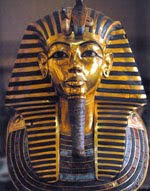
Archaeological digs suggest the use of Gold began in the Middle East where the first known civilizations began. The oldest pieces of
gold jewelry Egyptian jewelry were found in the tomb of Queen Zer and that of Queen Pu-abi of Ur in Sumeria and are the oldest examples found of any kind of jewelry in a find from the third millennium BC. Over the centuries, most of the Egyptian tombs were raided, but the tomb of Tutankhamen was discovered undisturbed by modern archaeologists. Inside the largest collection of gold and jewelry in the world was found and included a gold coffin whose quality showed the advanced state of Egyptian craftsmanship and goldworking (second millennium BC).
The Persian Empire, in what is now Iran, made frequent use of Gold in artwork as part of the religion of Zoroastrianism. Persian goldwork is most famous for its animal art, which was modified after the Arabs conquered the area in the 7th century AD.
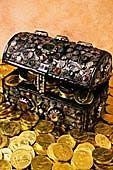 When Rome began to flourish, the city attracted talented Gold artisans who created gold jewelry of wide variety. The use of gold in Rome later expanded into household items and furniture in the homes of the higher classes. By the third century AD, the citizens of Rome wore necklaces that contained coins with the image of the emperor. As Christianity spread through the European continent, Europeans ceased burying their dead with their jewelry. As a result, few gold items survive from the Middle Ages, except those of royalty and from church hordes.
In the Americas, the skill of Pre-Columbian cultures in the use of Gold was highly advanced long before the arrival of the Spanish. Indian goldsmiths had mastered most of the techniques known by their European contemporaries when the Spanish arrived. They were adept at filigree, granulation, pressing and hammering, inlay and lost-wax methods. The Spanish conquerors melted down most of the gold that they took from the peoples of this region and most of the remaining examples have come from modern excavations of grave sites. The greatest deposits of gold from these times were in the Andes and in Columbia.
During the frontier days of the United States news of the discovery of gold in a region could result in thousands of new settlers, many risking their lives to find gold. Gold rushes occurred in many of the Western States, the most famous occuring in California at Sutter’s Mill in 1848. Elsewhere, gold rushes happened in Australia in 1851, South Africa in 1884 and in Canada in 1897.
The rise of a
gold standard was meant to stabilize the global economy, dictating that a nation must limit its issued currency to the amount of gold it held in reserve. Great Brittain was the first to adopt the gold standard in 1821, followed, in the 1870s, by the rest of Europe followed. The system remained in effect until the end of the first world war, after which the US was the only country still honoring the Gold Standard. After the war, other countries were allowed to keep reserves of major currencies instead of gold. The arrival of the great depression marked the end of the U.S. export of gold in the 1930s. By mid 20th century, the US dollar had replaced gold in international trade.
text source : http://bullion.nwtmint.com/gold_history.php
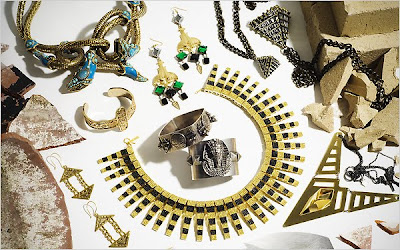 TOMB RAIDERS Clockwise from top left: Lanvin gold and turquoise serpent choker, $2,875 at Barneys New York; Fallon gunmetal and crystal Isis earrings, $150 at Barneys Co-Op; Anndra Neen mixed-metal pyramid pendants, $495 and $550 at kirnazabete.com; TomTom 18-karat gold-plated link necklace with gunmetal chains, $325 at evanewyork.net; Eddie Borgo Step Collar in 18-karat gold plate and black pavé crystals, $1,250 at Bergdorf Goodman; A Peace Treaty handmade antiqued gold-plated bronze earrings, $170 at apeacetreaty.com; Low Luv by Erin Wasson 14- karat gold-plated hieroglyphic cuff, $105 at mywardrobe.com; Fallon oxidized sterling-silver-plated brass Cairo bangle, $170 at Fenton/Fallon, and Tomb cuff, $198 at shopbop.com.


